Park Güell salamander
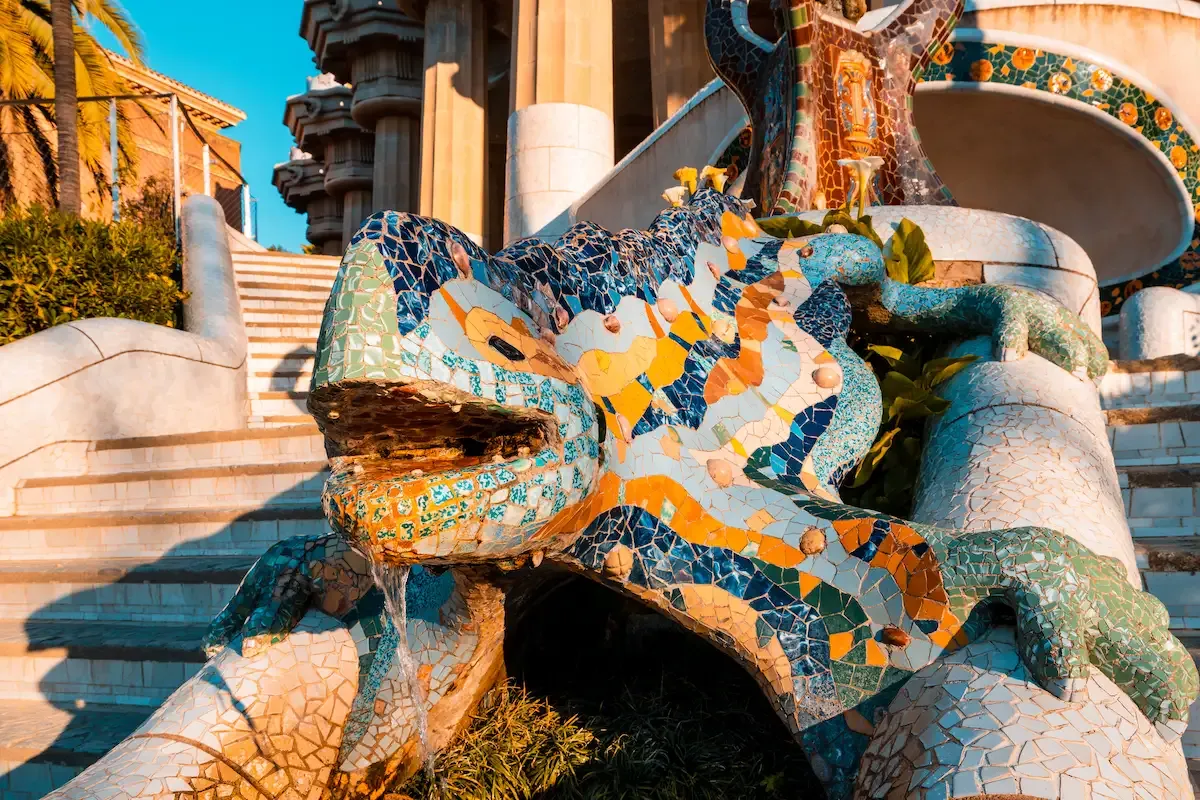
The Park Güell salamander, often called El Drac, serves as the primary symbol of Antoni Gaudí’s architectural vision. This mosaic-covered sculpture guards the entrance stairway and draws thousands of visitors to the Monumental Zone daily.
Support when you need it
Customer service available to help with all your needs from 8:00 AM to 7:00 PM.
Fast online booking
Select the ticket that fits your needs and preferences, and avoid the lines by booking here.
Top attraction in Barcelona
Explore Antoni Gaudí's park and experience the unique architectural heritage of Catalan Modernism.
Quick facts about Park Güell's salamander
The mosaic lizard, known as El Drac, occupies the central position on the Dragon Stairway in Park Güell’s Monumental Zone. Antoni Gaudí created the sculpture using the trencadís technique, which involves applying recycled ceramic shards to a mortar surface. This architectural feature serves as the site's primary symbol and coordinates with the park's water management system.
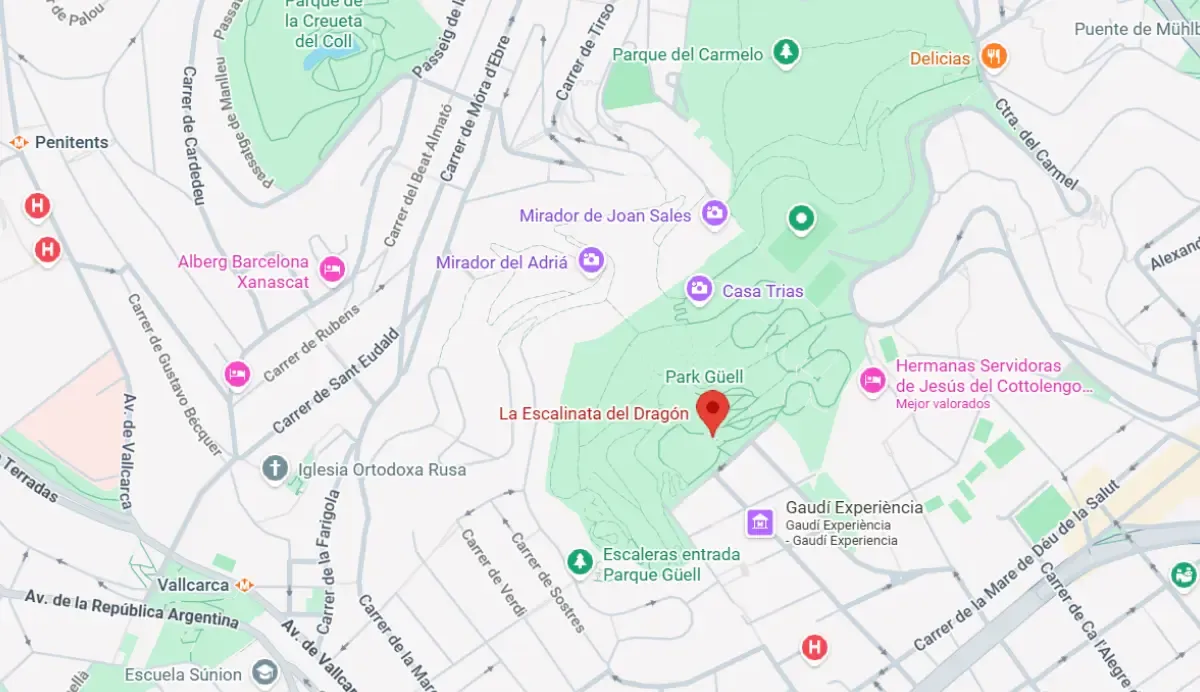
Location of the Park Güell lizard
The mosaic lizard, known as El Drac, occupies a central position on the Dragon Stairway within the Monumental Zone of Park Güell. This architectural feature sits directly beyond the main entrance pavilions on Carrer d'Olot. Visitors find the sculpture on the second flight of the double staircase that leads toward the Hypostyle Room.
The site lies on the park's central axis, serving as a focal point for the entrance complex. Geographically, the lizard stands on the southern slope of Carmel Hill in the Gràcia district of Barcelona. Access to this area requires a pre-booked entry ticket, as park management limits visitor numbers to protect the ceramic surfaces.
The story behind the Park Güell salamander
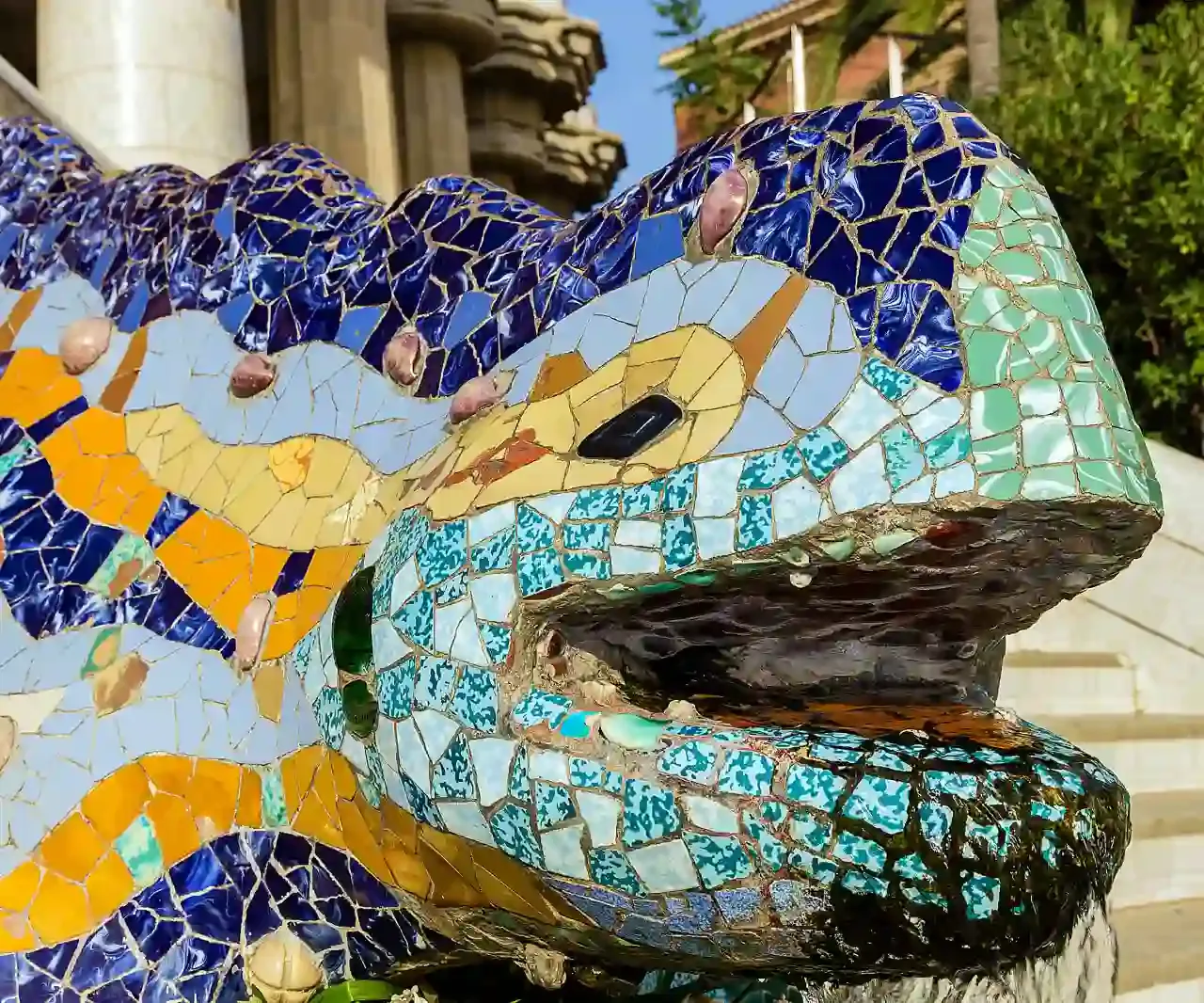
Materials
Antoni Gaudí constructed the Park Güell salamander using a core of brick and mortar covered in a skin of multicolored ceramic shards. This decorative method, known as trencadís, involves the application of broken tiles, glass, and pottery fragments to a curved surface.
The technique allowed the architect to follow the organic, undulating shapes of the creature while utilizing recycled materials from local factories. These glass and ceramic pieces provide a waterproof layer that protects the internal structure from environmental erosion. The selection of vibrant primary colors ensures that the Park Güell salamander remains visible from the main entrance, reflecting natural light across the Dragon Stairway.
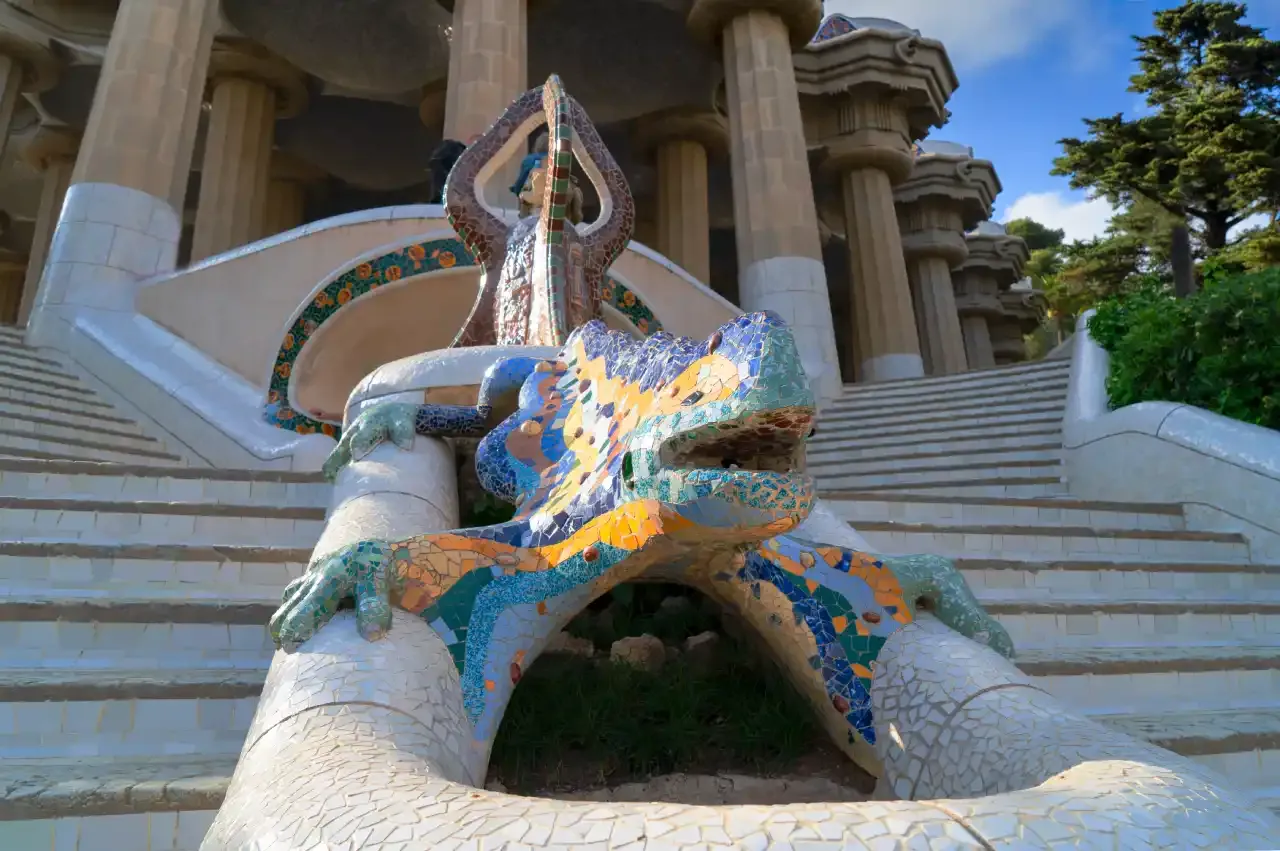
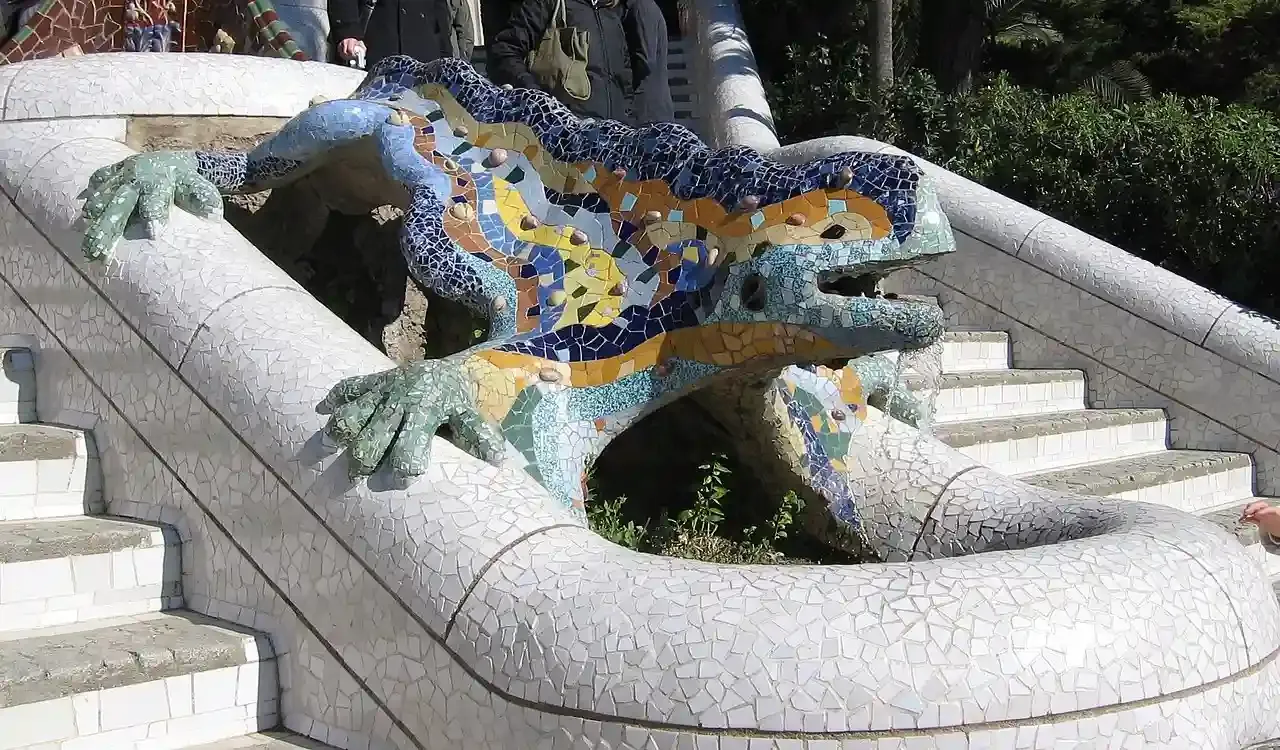
What does the lizard symbolize in Barcelona?
The mosaic lizard, or El Drac, serves as the primary visual representative of Barcelona’s architectural identity. This sculpture transcends its role as a decorative element to symbolize Catalan culture, scientific advancement, and the Modernisme movement. To understand the Park Güell salamander, one must examine the historical context of late 19th-century Catalonia and the personal convictions of Antoni Gaudí.
Cultural and political identity
During the Renaixença, a period of Catalan cultural renewal, artists sought to reclaim regional identity. The Park Güell salamander incorporates the four stripes of the Catalan flag within a medallion located directly below its head, linking the work to regional pride. The choice of a reptile also evokes the legend of Saint George, the patron saint of Catalonia. In this context, the sculpture represents the dragon, though Gaudí portrays it as a static, integrated part of the public space, symbolizing the harmony between human ingenuity and the natural world.
Scientific and alchemical meanings
Gaudí’s interests included natural science and alchemy. The Park Güell salamander frequently appears in academic analyses as a reference to the alchemical element of fire. In medieval tradition, the salamander possessed the ability to survive within flames. By placing a fire symbol within a water management system, Gaudí created a juxtaposition of the classical elements: earth, air, fire, and water. This "biological architecture" reflects the Modernisme philosophy, which favored organic forms over the rigid lines of the Industrial Revolution.
Technical innovation
The symbolism also resides in the physical construction of the piece. The trencadís technique symbolizes the industrial spirit of Barcelona. Gaudí and Josep Maria Jujol practiced an early form of recycling by collecting discarded pieces from local factories. The mosaic skin represents the assembly of diverse fragments into a cohesive whole, mirroring the social fabric of a city where different industries and classes converged to build a modern metropolis.
Global recognition
In the 21st century, the Park Güell salamander symbolizes Barcelona’s status as a global center for art. As a widely recognized image, it represents the successful preservation of a UNESCO World Heritage site. For residents and visitors alike, the sculpture remains a testament to a period of artistic bravery, where architects challenged conventional norms to create a unique visual language that defines the spirit of Barcelona.
Other animal sculptures in Park Güell
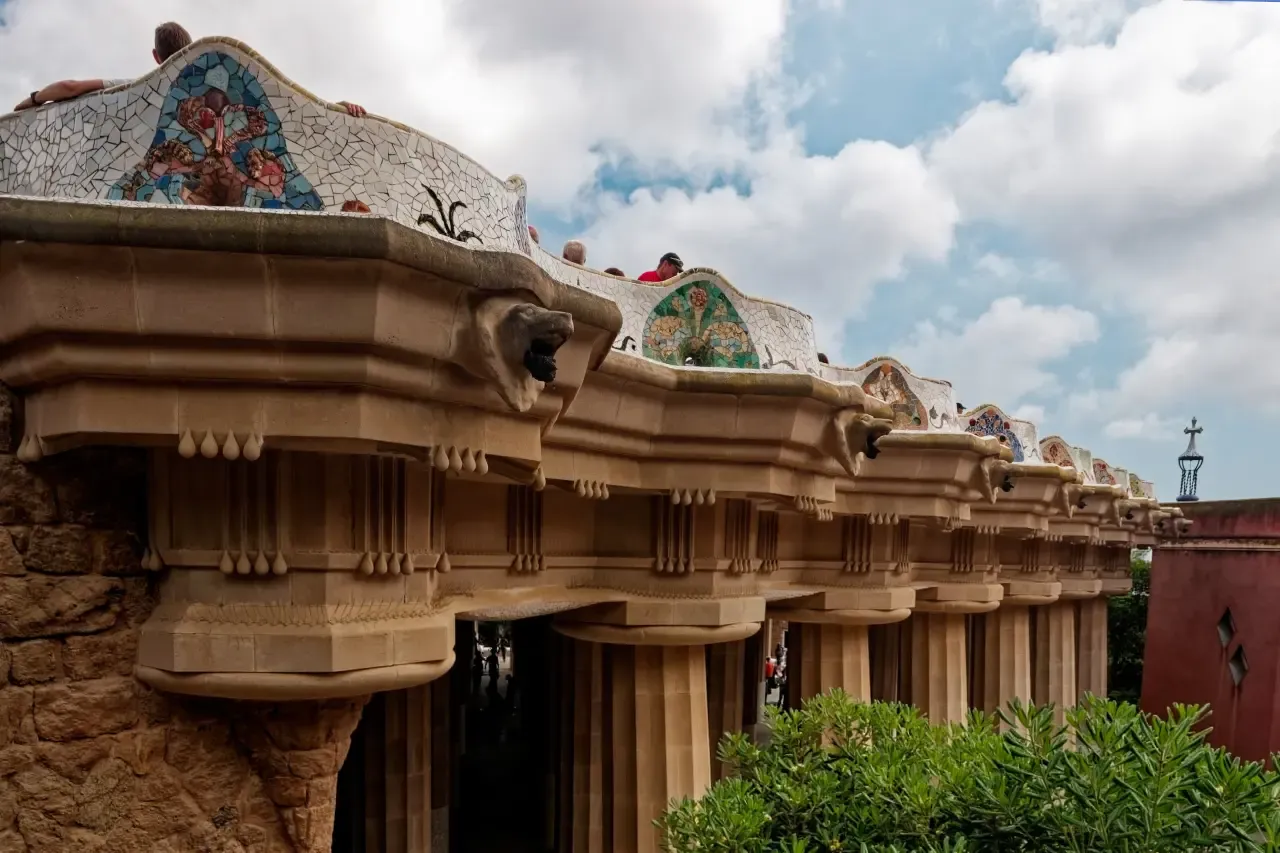
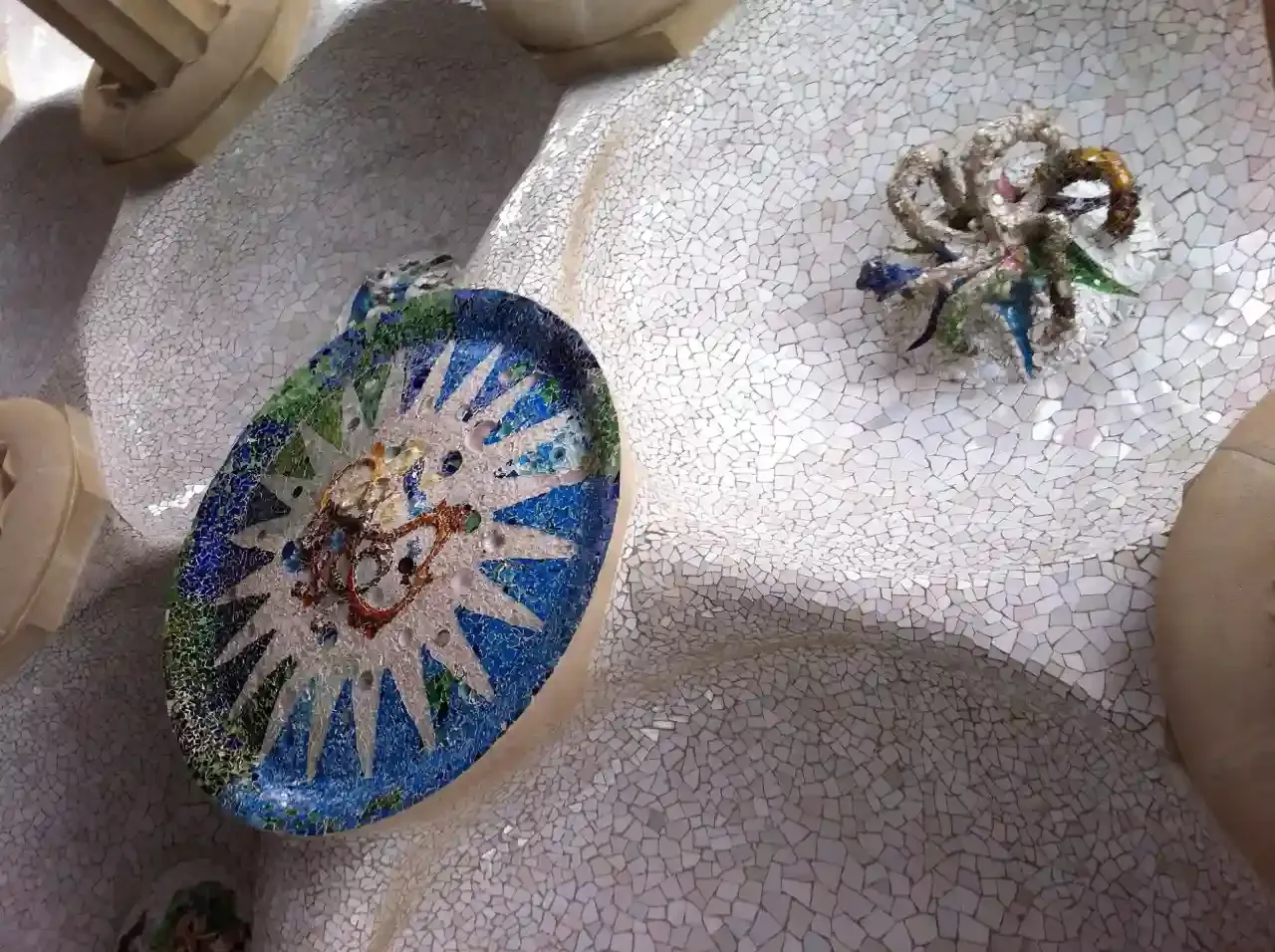
Beyond the Park Güell salamander, the architectural site contains several zoomorphic figures including a snake, a lion, and an octopus. These sculptures integrate with the park's fountains and structural elements, reflecting Antoni Gaudí’s commitment to organic design and symbolic representation:
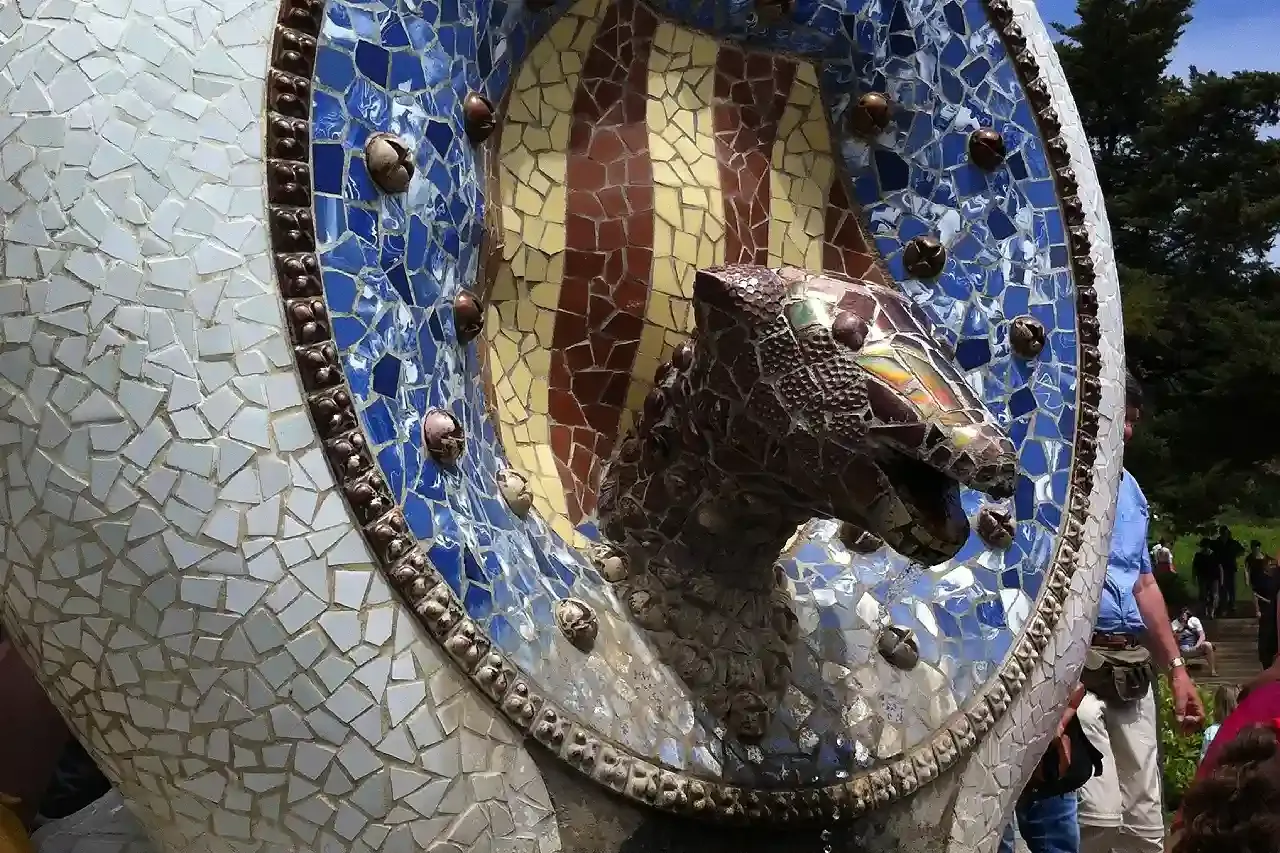
Snake medallion
The figure of a snake occupies a central position within a circular medallion on the first landing of the entrance stairway. Gaudí placed this sculpture directly below the Park Güell salamander, framing it within the yellow and red stripes of the Catalan flag.
This specific representation incorporates a serpent’s head emerging from a disk, which scholars often interpret as a tribute to the bronze serpent of Moses or a symbol of the medical profession. The architect utilized the trencadís technique to define the textures of the scales and the surrounding solar rays. This figure functions as the first of three water-related sculptures that visitors encounter when ascending toward the Hypostyle Room.